What We Repair & Recondition
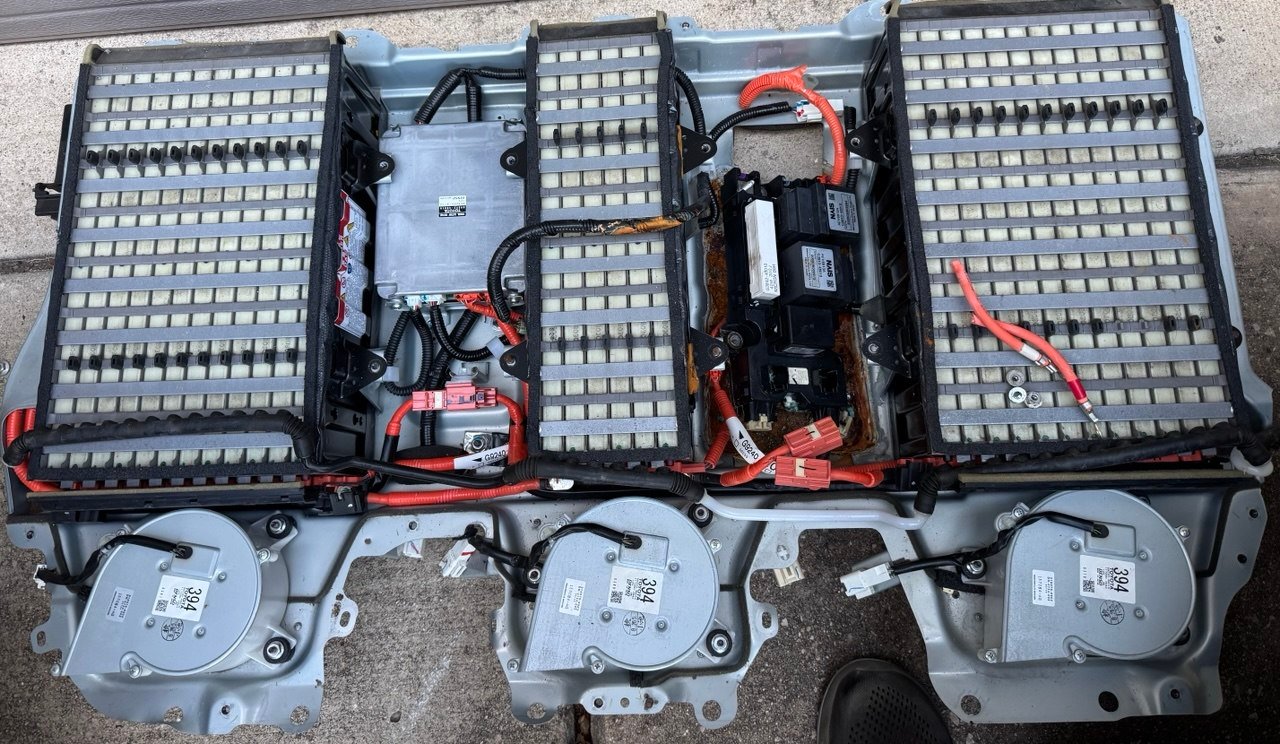
At DFW Hybrid Battery, we repair and recondition high-voltage hybrid battery packs when testing shows that a reliable repair is technically practical. Our work may involve individual battery modules, electrical connections, bus bars, voltage-sensing components, battery cooling components, and other serviceable parts within the hybrid battery system.
Battery Balancing & Reconditioning
Battery modules are evaluated and balanced to improve consistency across the pack when reconditioning is technically appropriate.
Battery Module Testing & Replacement
Weak or failed modules are identified, tested, and replaced with suitable matched modules when appropriate.
Bus Bars & Electrical Connections
Corroded, loose, or deteriorated high-voltage connections and bus bars are inspected and serviced when repairable.
Voltage-Sensing & Battery Wiring
Battery sensing connections, harnesses, terminals, and related wiring are inspected for corrosion, damage, or abnormal readings.
Cooling System Inspection & Service
Battery cooling fans, ducts, airflow paths, and related components are inspected when temperature or cooling problems are suspected.
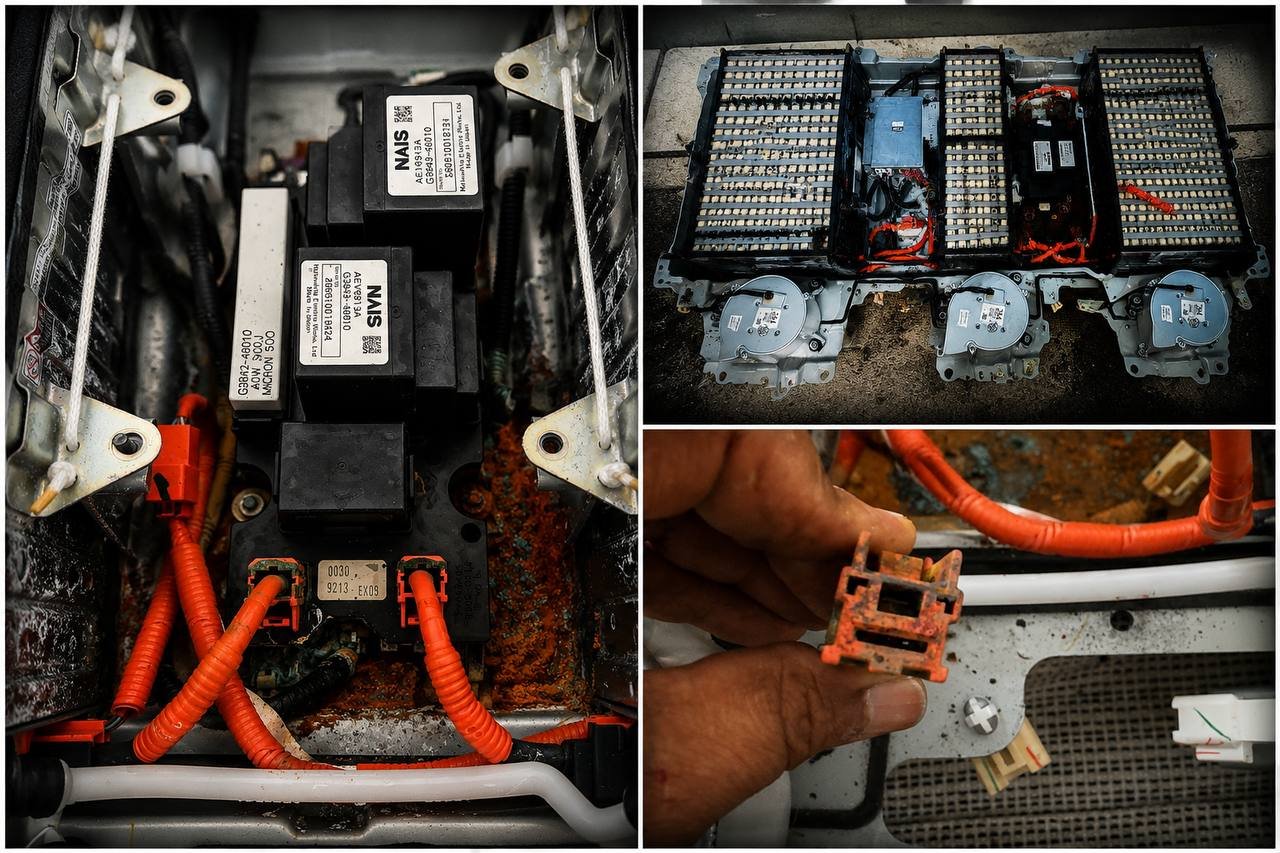
Corrosion & Moisture-Related Repair
When practical, repairable corrosion or moisture-related damage inside the battery pack is identified and affected components are serviced or replaced.
How We Diagnose & Repair Hybrid Batteries
01 Diagnose → 02 Inspect → 03 Test → 04 Repair & Match → 05 Verify
Hybrid Battery Repair vs. Replacement
Not every hybrid battery problem requires complete battery replacement. After diagnostic testing, we evaluate the overall condition of the battery to determine whether repair or reconditioning is a practical and cost-effective option.
Repair May Be a Good Option When:
✓ One or more battery modules are weak or failed
✓ Battery voltage or capacity is imbalanced
✓ Internal resistance varies significantly between modules
✓ Bus bars, terminals, or electrical connections require service
✓ Corrosion or another repairable condition is identified
✓ The remaining battery modules are in suitable condition
✓ Diagnostic testing supports a reliable repair or reconditioning
Replacement May Be a Better Option When:
✓ Deterioration is widespread throughout the battery pack
✓ Many modules have significantly reduced capacity
✓ Multiple modules show excessive internal resistance
✓ The battery has severe physical, heat, or water damage
✓ Previous repairs have not provided a reliable result
✓ Repair cost approaches the cost of a better replacement option
✓ Testing indicates that repair is unlikely to provide a dependable result
Our approach is simple: Diagnose first. Repair when practical. Replace only when necessary.
Common Hybrid Battery Problems We Diagnose & Repair
Hybrid battery problems can develop from normal battery aging, heat, moisture, electrical connection issues, cooling problems, or deterioration of individual modules. Proper diagnosis helps determine whether the problem is isolated and repairable or affects the battery pack more extensively.
Weak or Failed Modules
Individual battery modules can lose capacity or develop abnormal voltage behavior, causing imbalance and reduced battery performance.
Voltage & Capacity Imbalance
Differences between battery modules or blocks can cause rapid state-of-charge changes, reduced performance, and hybrid system warnings.
High Internal Resistance
Aging or deteriorated modules may develop increased internal resistance, resulting in greater voltage drop under load and excessive heat.
Corrosion & Moisture Damage
Water intrusion and corrosion can damage bus bars, terminals, sensing connections, wiring, and other high-voltage battery components.
Cooling & Temperature Problems
Restricted airflow, dirty cooling fans, or other cooling-system problems can increase battery temperature and accelerate deterioration.
Bus Bars, Wiring & Connections
Loose, corroded, or damaged electrical connections and voltage-sensing components can create battery faults even when the modules themselves are still usable.
Symptoms of a Weak or Failing Hybrid Battery
Signs Your Hybrid Battery May Need Attention
Hybrid battery problems do not always begin with a complete battery failure. Changes in vehicle performance, battery behavior, fuel economy, or warning messages can indicate that the battery should be professionally evaluated.
✓ Check Hybrid System or hybrid battery warning message
✓ Rapid changes in the battery state-of-charge display
✓ Reduced fuel economy
✓ Reduced power or poor acceleration
✓ Gasoline engine running more frequently than normal
✓ Hybrid battery cooling fan running loudly or frequently
✓ Vehicle unable to enter READY mode
✓ Battery-related diagnostic trouble codes
✓ Abnormal battery temperature or overheating
✓ Recurring warning lights that return after being cleared
These symptoms do not automatically mean the entire hybrid battery needs replacement. Proper diagnostic testing is required to determine the actual cause.
How to Help Your Hybrid Battery Last Longer
Good battery care cannot prevent normal aging, but it can help reduce unnecessary heat, airflow restrictions, and avoidable stress on the hybrid battery system.
✓ Keep the battery cooling intake and fan clean.
✓ Avoid blocking battery ventilation openings.
✓ Address engine and cooling-system problems promptly.
✓ Do not ignore recurring hybrid warnings.
✓ Avoid leaving the vehicle unused for extremely long periods when possible.
✓ Have the battery diagnosed when fuel economy, state-of-charge behavior, or battery temperatures change noticeably.
These tips can help support battery health, but they do not stop normal battery aging or guarantee a specific battery lifespan.