2017 Hyundai Sonata Hybrid – No READY Condition Caused by Battery Pack Safety Disconnect
Case Study Overview
A real-world diagnostic and repair case involving a 2017 Hyundai Sonata Hybrid that would not enter READY mode. The diagnosis ultimately revealed an unusual battery pack safety disconnect mechanism triggered by physical swelling of the high-voltage battery modules.
Vehicle & Initial Customer Complaint
Vehicle: 2017 Hyundai Sonata Hybrid
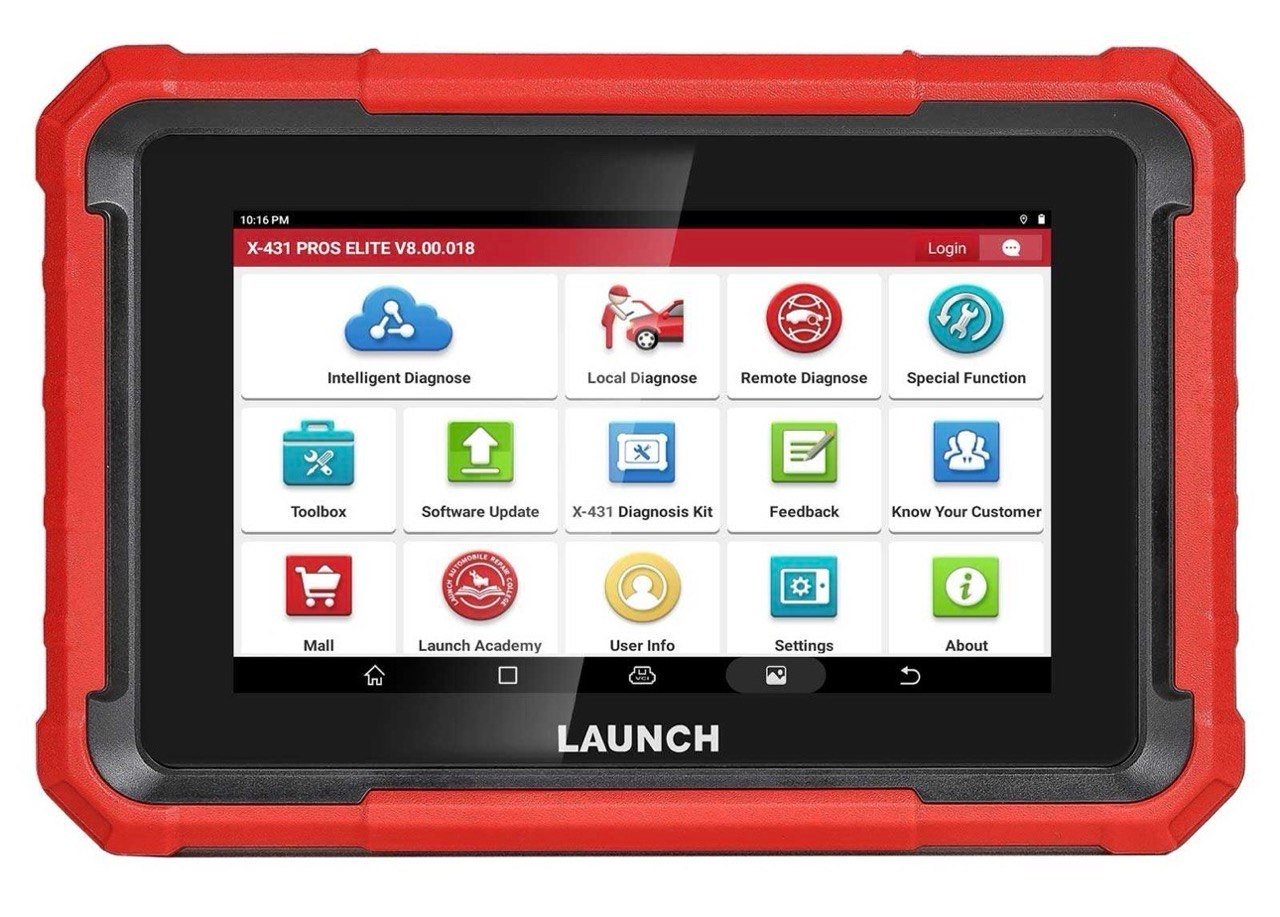
Initial Complaint: The vehicle initially experienced a cylinder #4 misfire. Shortly afterward, the hybrid system warning appeared and the vehicle would no longer enter READY mode. Initial diagnostic scanning identified hybrid-system related fault codes, including P1BA7 and P1B77, along with P3190 related to low engine power.
Initial Condition:
The high-voltage battery was at a low state of charge, and the vehicle could not start or enter READY mode. Because the engine misfire occurred immediately before the hybrid-system failure, both the engine-side problem and the high-voltage battery system had to be evaluated before determining the root cause
Initial Diagnostic Findings
Initial Scan Results:
A full-system diagnostic scan was performed. The primary fault codes identified during the diagnostic process included:
P3190 – Poor Engine Power: Associated with the engine power-loss/misfire condition.
P1BA7 – Hybrid System Fault: A hybrid-system-related fault detected during the initial diagnosis.
P1B77 – High-Voltage Battery System Fault: This code remained relevant during subsequent testing and became an important part of the diagnostic path.
At this stage, the fault codes alone did not justify replacing the hybrid battery. Further testing of the high-voltage battery, power relay assembly, safety interlock circuit, and related components was required to isolate the actual cause of the NO READY condition
High-Voltage Battery Charging & Diagnostic Testing
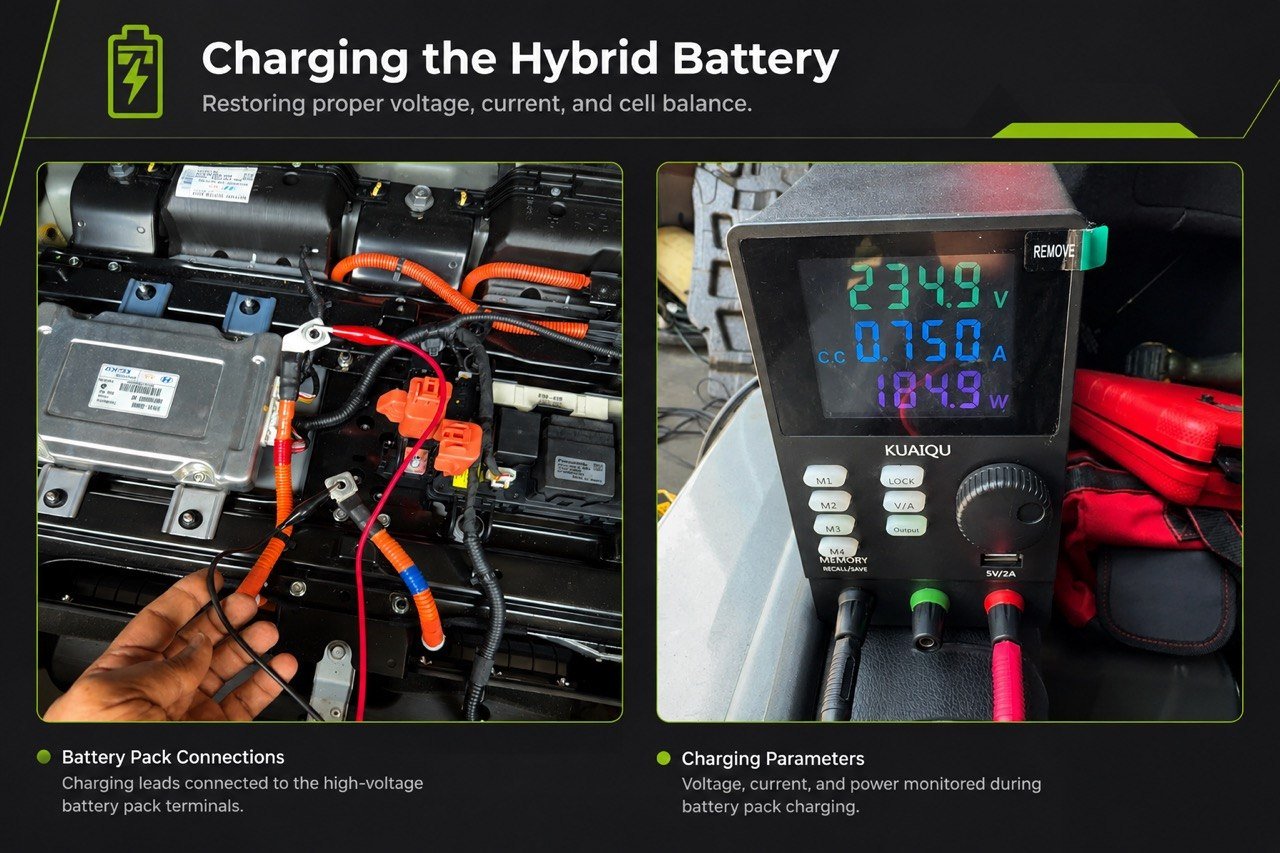
Battery State & Charging Procedure:
Because the high-voltage battery had a low state of charge, the pack was externally charged as part of the diagnostic process. Charging was performed gradually while pack voltage, charging current, and battery behavior were monitored.
The pack voltage was increased from approximately 250V toward 270V, using a controlled charging current of approximately 0.5–0.75A. As the pack approached the target voltage, charging behavior was monitored carefully to avoid excessive voltage or abnormal heating.
After charging, the battery reached a sufficient state of charge for further diagnosis. However, despite the improved battery SOC, the vehicle still would not enter READY mode.
Diagnostic Significance:
This was an important finding because it demonstrated that the NO READY condition was not simply caused by a discharged high-voltage battery. The diagnostic process therefore continued into the battery pack control, relay, interlock, and internal safety systems.
Power Relay Assembly (PRA) Testing:
Because the vehicle still would not enter READY mode after the high-voltage battery was charged, the Power Relay Assembly (PRA) and related high-voltage safety circuits were investigated.
The original PRA was removed and replaced with another known-good unit for diagnostic comparison. Despite installing the known-good PRA, the vehicle still would not enter READY mode.
Safety Plug & Interlock Inspection:
The high-voltage safety plug and related connections were inspected to verify proper installation and electrical continuity. No external problem was found that could explain the persistent NO READY condition.
Diagnostic Result:
The PRA replacement and safety-circuit checks did not restore READY mode. This significantly narrowed the fault to something inside the high-voltage battery assembly rather than the external relay assembly alone.
At this stage, the next diagnostic step was to determine whether the problem was associated with the BMS, internal battery wiring/interlock system, or another physical condition inside the battery pack
Full Pack Replacement Test:
After charging the original battery and testing the PRA, safety plug, interlock circuit, and related components without restoring READY mode, a complete known-good high-voltage battery pack was installed in the vehicle as a diagnostic test.
With the known-good battery pack installed, the vehicle immediately entered READY mode and operated normally.
This was a critical turning point in the diagnosis.
Because the vehicle operated normally with the replacement battery assembly, the inverter, vehicle-side high-voltage wiring, hybrid control system, and other major external components were effectively ruled out as the primary cause of the NO READY condition.
Diagnostic Conclusion at This Stage:
The fault was confirmed to be located within the original high-voltage battery pack assembly.
However, this did not automatically mean that the battery modules themselves had failed. The original pack still required internal inspection to determine exactly what inside the assembly was preventing the vehicle from entering READY mode.
PRA, Relay & Safety Circuit Testing
This is a title
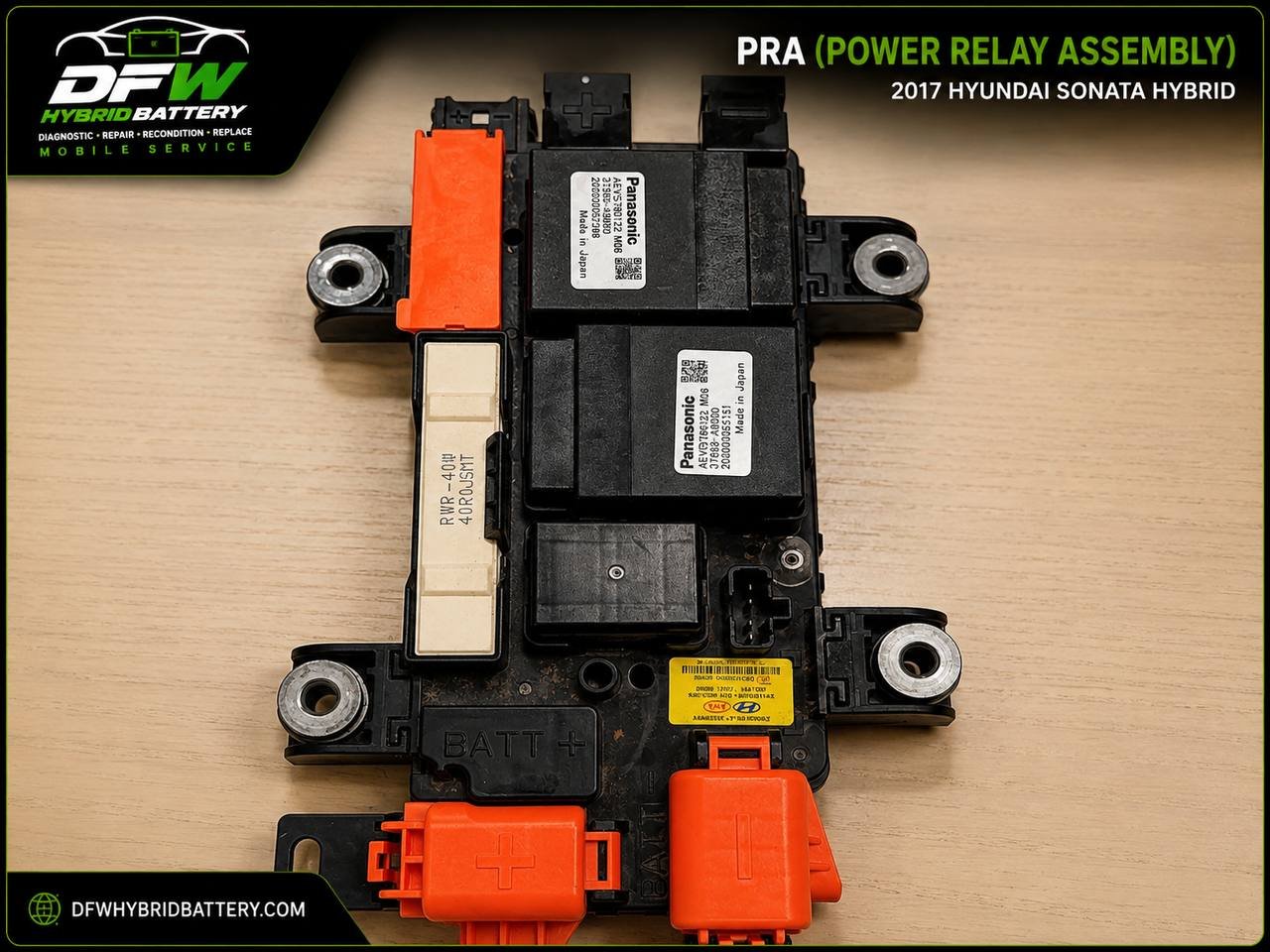
Power Relay Assembly (PRA) Testing:
Because the vehicle still would not enter READY mode after the high-voltage battery was charged, the Power Relay Assembly (PRA) and related high-voltage safety circuits were investigated.
The original PRA was removed and replaced with another known-good unit for diagnostic comparison. Despite installing the known-good PRA, the vehicle still would not enter READY mode.
Safety Plug & Interlock Inspection:
The high-voltage safety plug and related connections were inspected to verify proper installation and electrical continuity. No external problem was found that could explain the persistent NO READY condition.
Diagnostic Result:
The PRA replacement and safety-circuit checks did not restore READY mode. This significantly narrowed the fault to something inside the high-voltage battery assembly rather than the external relay assembly alone.
At this stage, the next diagnostic step was to determine whether the problem was associated with the BMS, internal battery wiring/interlock system, or another physical condition inside the battery pack
Full Battery Pack Swap – Critical Diagnostic Test
Full Pack Replacement Test:
After charging the original battery and testing the PRA, safety plug, interlock circuit, and related components without restoring READY mode, a complete known-good high-voltage battery pack was installed in the vehicle as a diagnostic test.
With the known-good battery pack installed, the vehicle immediately entered READY mode and operated normally.
This was a critical turning point in the diagnosis.
Because the vehicle operated normally with the replacement battery assembly, the inverter, vehicle-side high-voltage wiring, hybrid control system, and other major external components were effectively ruled out as the primary cause of the NO READY condition.
Diagnostic Conclusion at This Stage:
The fault was confirmed to be located within the original high-voltage battery pack assembly.
However, this did not automatically mean that the battery modules themselves had failed. The original pack still required internal inspection to determine exactly what inside the assembly was preventing the vehicle from entering READY mode.
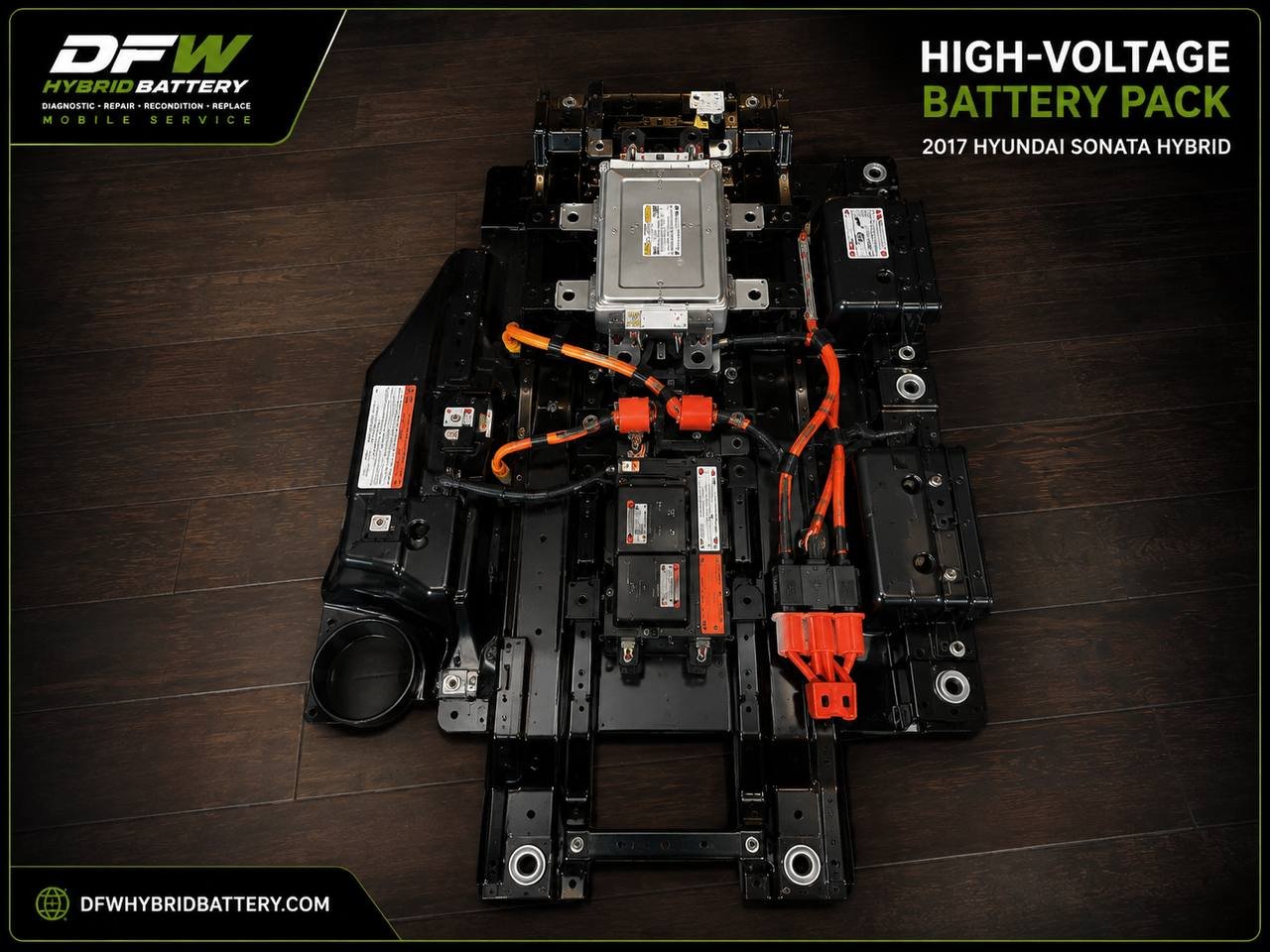
Internal Battery Pack Inspection & Root Cause Discovery
Internal Pack Inspection:
After the fault was isolated to the original high-voltage battery assembly, the pack was removed and opened for detailed internal inspection.
During inspection, physical swelling was observed in multiple battery modules. The swelling had created mechanical pressure inside the tightly assembled battery pack.
Unusual Safety Disconnect Mechanism:
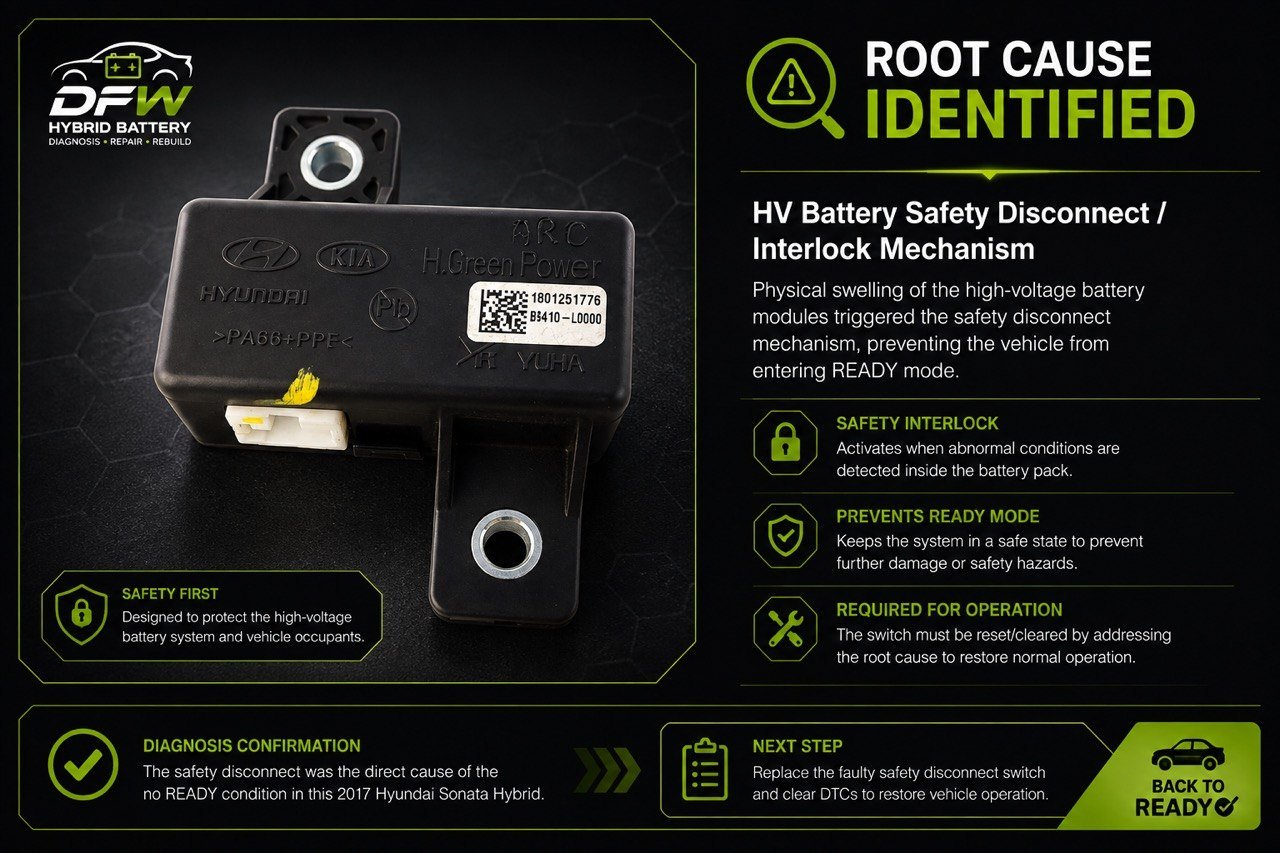
Further inspection revealed an important feature inside the battery assembly: a mechanical safety disconnect mechanism designed to interrupt the high-voltage circuit when excessive physical expansion occurs within the module stack.
As the modules expanded, pressure inside the pack activated this mechanism and physically interrupted the high-voltage series circuit.
This explained why the battery could show voltage and accept an external charge, yet the vehicle was still unable to establish the required high-voltage circuit and enter READY mode.
Root Cause Discovery:
The NO READY condition was therefore traced to a physical safety disconnect inside the battery pack triggered by swollen battery modules, rather than a failed PRA or a simple low state of charge.
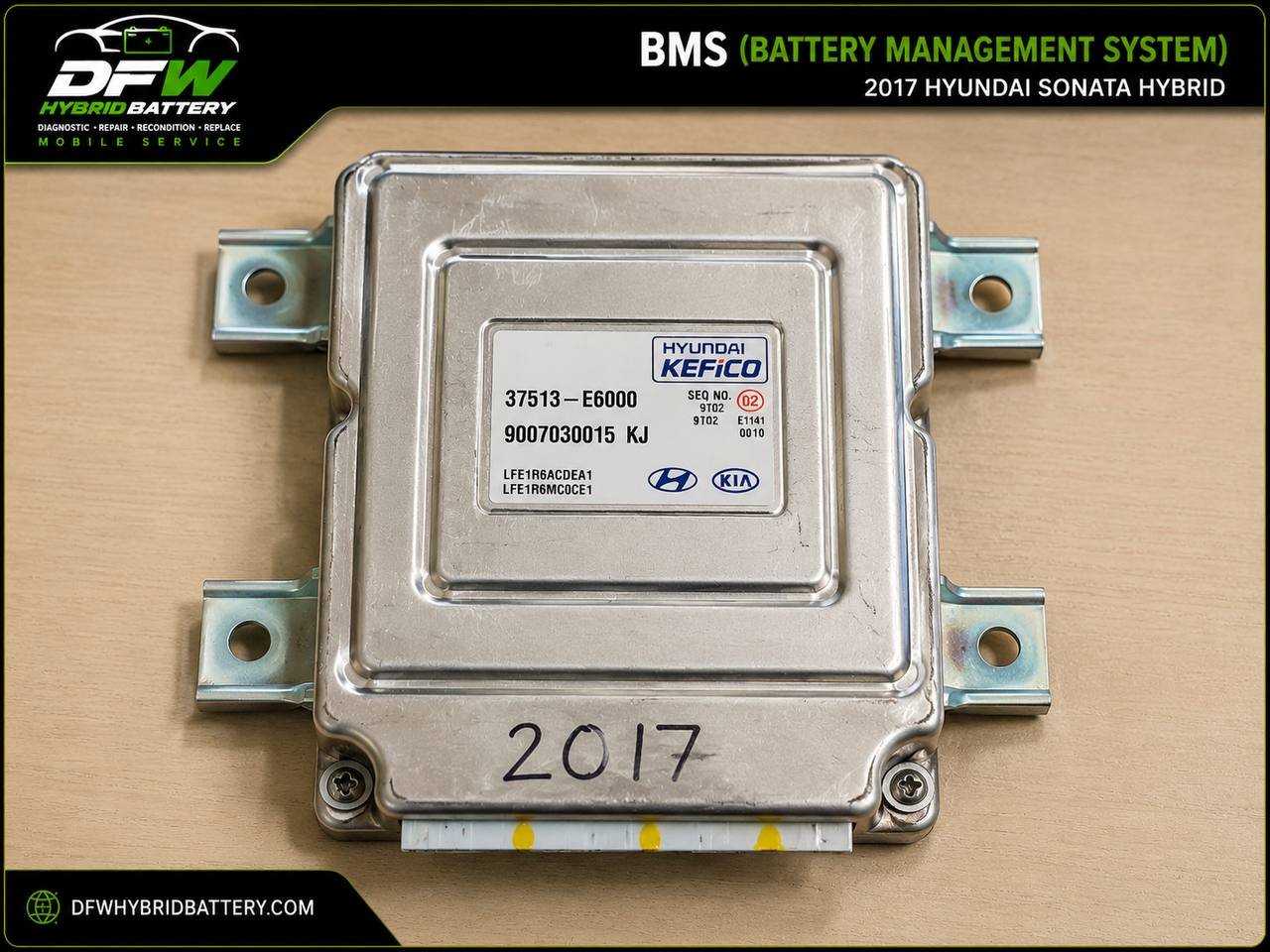
Why Did the Battery Modules Swell?
Relationship to the Initial Engine Misfire:
The sequence of events was significant. The customer initially experienced a cylinder #4 misfire, followed shortly afterward by the hybrid-system warning and the NO READY condition.
During the diagnostic process, multiple battery modules were found physically swollen. This condition is consistent with the battery having experienced abnormal electrical and/or thermal stress.
Possible Overcharge Event:
Based on the observed module swelling and the sequence of events, an abnormal charging condition may have occurred during or following the engine malfunction. Excessive charging voltage, current, temperature, or prolonged operation outside the battery’s normal operating range can contribute to gas generation and swelling in lithium-polymer battery cells.
However, the diagnostic evidence available in this case does not conclusively prove that the cylinder #4 misfire directly caused the battery to overcharge. The misfire and subsequent hybrid-system event are therefore treated as an important part of the failure sequence rather than a definitively proven direct cause of the module swelling.
What Was Confirmed:
What could be physically confirmed was that multiple modules had expanded sufficiently to activate the pack’s internal mechanical safety disconnect, interrupting the high-voltage circuit and preventing the vehicle from entering READY mode.
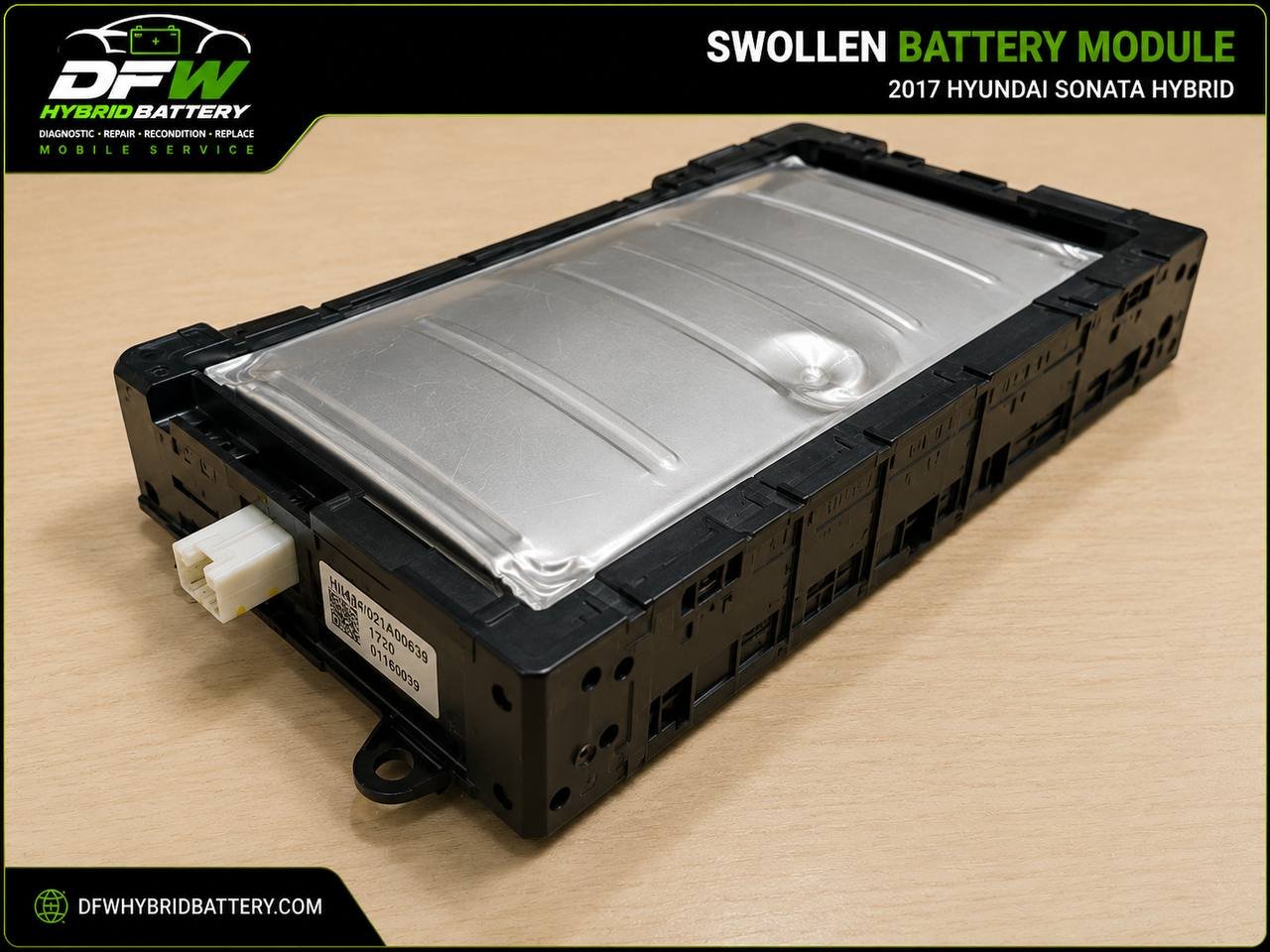
Battery Repair & Module Replacement
Repair Procedure:
After identifying the internal pack failure, the battery assembly was disassembled for module-level inspection and repair.
The swollen and compromised modules were removed from service and replaced with suitable tested modules. The replacement modules were evaluated for voltage, capacity, internal resistance, and overall condition before being installed into the battery pack.
Module Matching & Balancing:
The battery modules were matched as closely as practical to minimize differences in capacity and electrical behavior across the pack. The repaired battery assembly was then balanced and prepared for reinstallation.
The internal high-voltage connections, safety components, and battery pack assembly were inspected during reassembly to ensure proper installation.
Final Reassembly:
After the module replacement and battery servicing were completed, the high-voltage battery pack was reassembled and installed back into the vehicle.
Final Testing & Successful Repair
Post-Repair System Check:
After the repaired high-voltage battery pack was reinstalled, the vehicle successfully entered READY mode and the hybrid system operated normally.
A complete diagnostic scan was performed to check the hybrid control system, battery management system, and related vehicle modules. The previous NO READY condition was no longer present.
Road Test & Live Data Monitoring:
The vehicle was road-tested while key hybrid-system parameters were monitored, including battery state of charge, module behavior, battery temperatures, charging and discharging activity, and hybrid-system operation.
During the road test, the battery charged and discharged normally and the vehicle transitioned properly between engine and electric operation.
Final Result:
The repair successfully restored normal hybrid-system operation. The original NO READY condition was resolved, and the vehicle returned to normal operation following the battery repair.
Key Diagnostic Lessons From This Case
Key Takeaways:
This case demonstrates why proper diagnosis is critical before replacing expensive hybrid-system components.
A NO READY condition does not automatically mean that the entire hybrid battery has failed. In this case, charging the battery, testing the PRA and safety circuits, and finally installing a known-good battery pack allowed the fault to be systematically isolated.
The most important findings from this diagnosis were:
• Diagnostic trouble codes should be treated as starting points, not automatic instructions to replace parts.
• A battery pack may show measurable voltage and accept a charge while still having an internal high-voltage circuit interruption.
• Swollen battery modules can create more than a capacity problem; physical expansion can affect internal safety mechanisms and prevent vehicle operation.
• Testing with known-good components can be extremely valuable when isolating complex hybrid-system faults.
• Module-level inspection, testing, matching, and balancing can sometimes allow a battery assembly to be repaired rather than automatically replacing the complete pack.
DFW Hybrid Battery Approach:
Our diagnostic process focuses on identifying the actual cause of a hybrid-system failure before recommending repair or replacement. The goal is to avoid unnecessary parts replacement while determining the safest and most practical repair option for the vehicle.