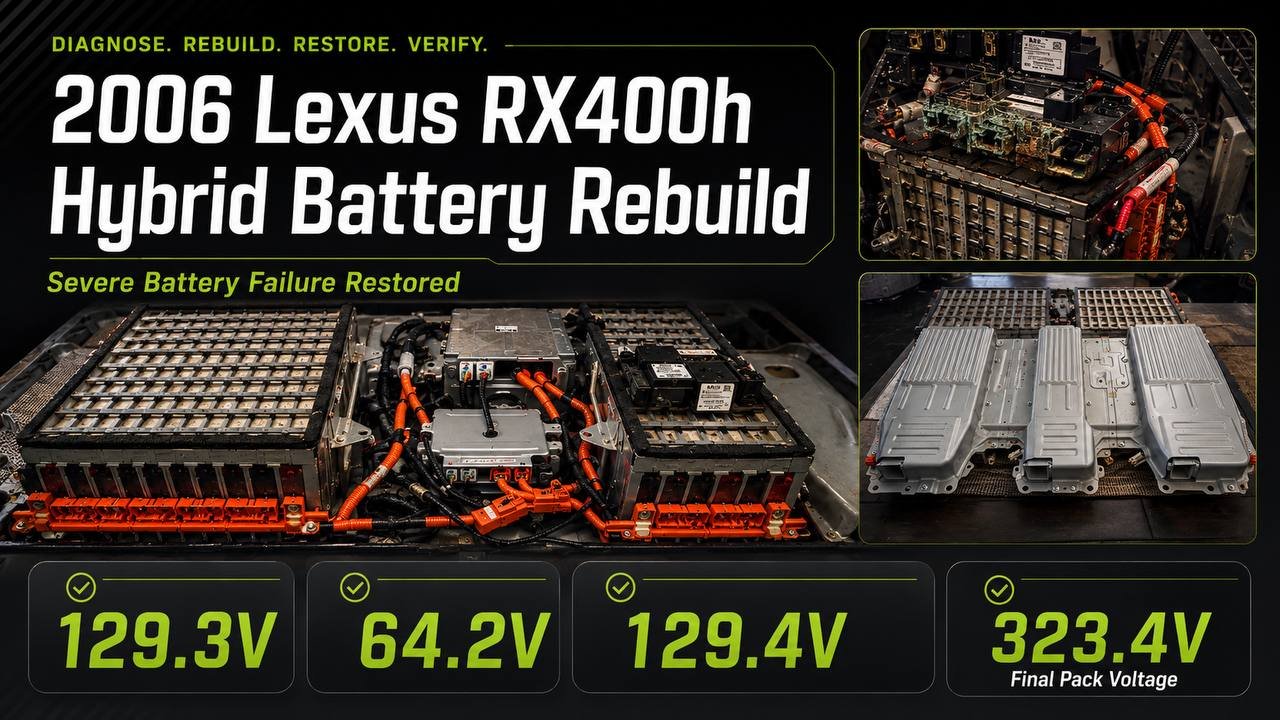
2006 Lexus RX400h Hybrid Battery Rebuild – Severe Battery Failure Restored
Problem: Severe HV battery failure, P3030/P3000, multiple modules near 0.5–3V
Repair: Full 30-module rebuild, PRA/cable replacement, balancing and capacity testing
Result: First-start READY, 30-minute road test, stable block voltages and IR
Warranty: 3-Month Limited Warranty
Customer Complaint
The vehicle arrived with a severe hybrid battery system failure and was unable to operate normally. Initial diagnostic testing showed multiple hybrid-related trouble codes, including:
● P3030 – High Voltage Battery / Battery ECU Voltage Detection Circuit
● P3000 – HV Battery Control System Malfunction
● C1259 – HV System Regenerative Malfunction
● C1310 – HV System Malfunction
The hybrid battery data was also highly abnormal. Several battery block voltage readings were extremely low, the reported State of Charge was near zero, and the P3030 code returned immediately after clearing.
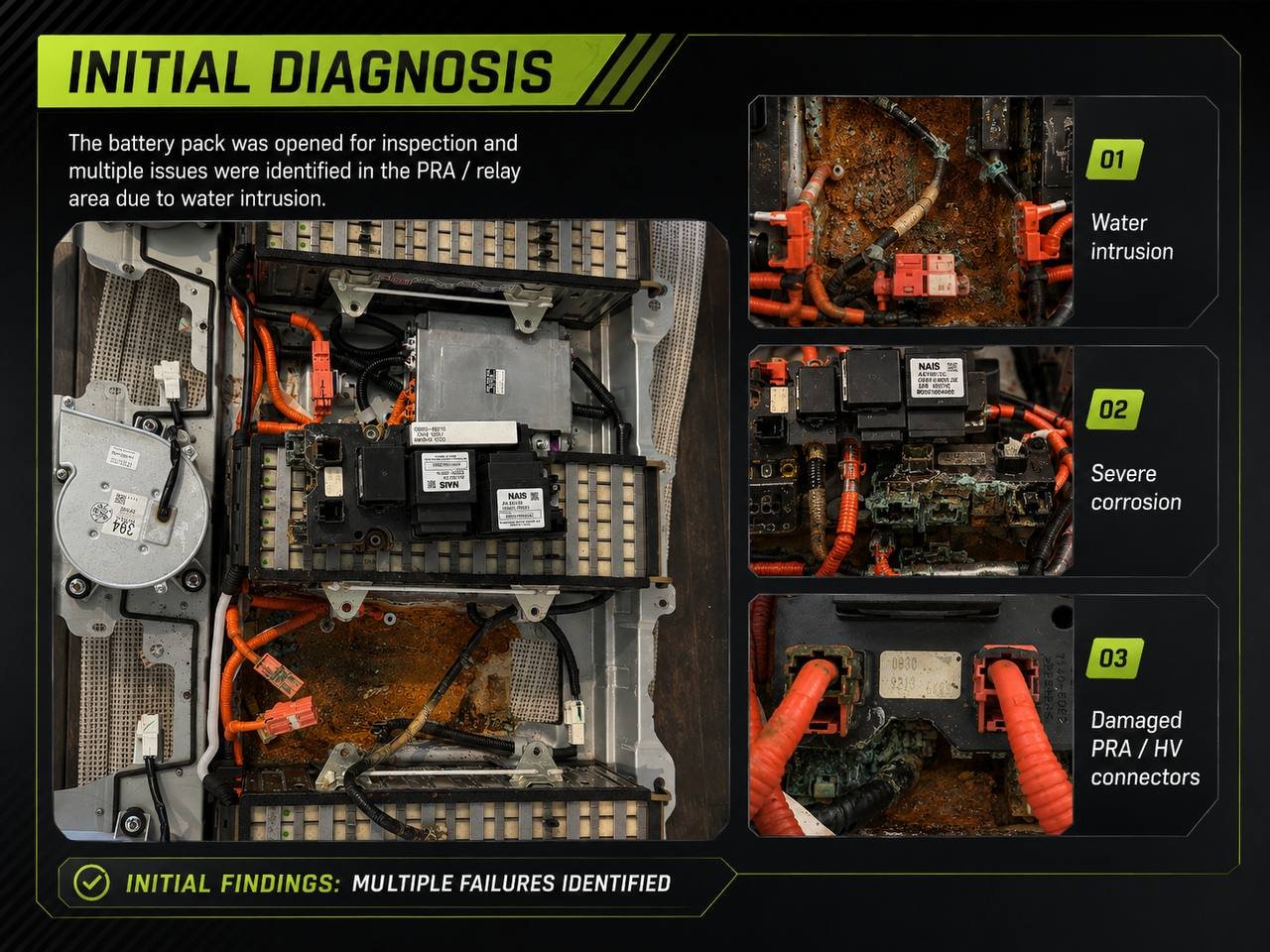
Initial Diagnosis
The first step was to determine whether the problem was caused by the battery modules themselves, the battery monitoring system, or damaged high-voltage components.
After removing and opening the battery pack, the extent of the damage became clear.
The original battery pack had suffered significant deterioration and contamination inside the battery assembly.
Several important problems were discovered:
● Multiple battery modules had extremely low voltage
● Some modules measured only approximately 0.5V to 3V
● Total usable pack voltage had collapsed dramatically
● Corrosion and moisture damage were present inside the battery assembly
● High-voltage connections and wiring showed damage
● The Power Relay Assembly and related high-voltage connections required attention
● Battery voltage sensing and electrical connections had to be carefully inspected because of the P3030 fault
At this point, simply replacing one or two weak modules would not have produced a reliable repair.
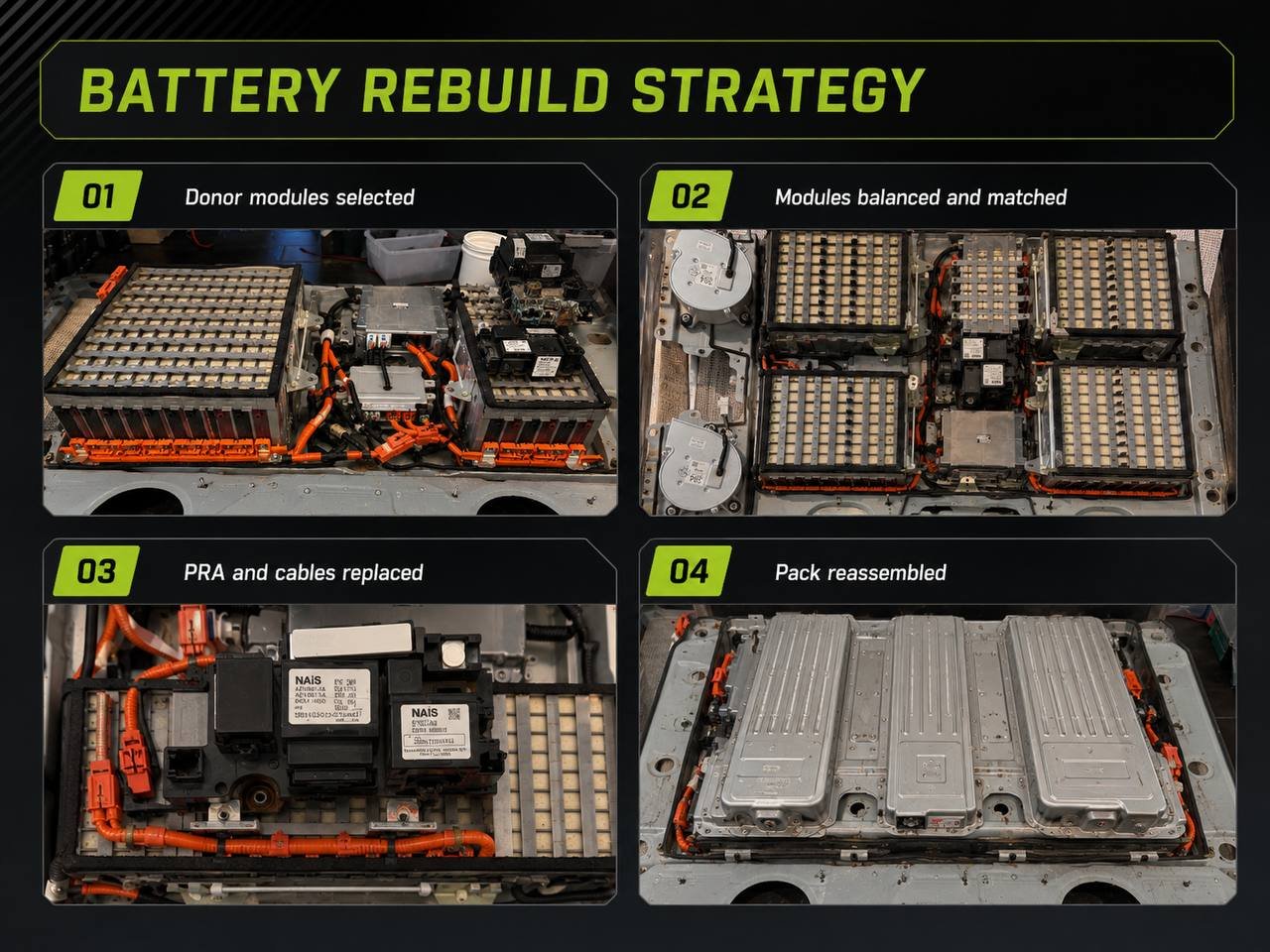
Battery Rebuild Strategy
Instead of attempting to reuse severely damaged modules, a compatible donor battery was used as the source for healthier replacement modules.
Each candidate module was individually tested before being approved for the rebuilt battery.
Testing included:
● Individual module voltage testing
● Multiple controlled charge and discharge cycles
● Capacity testing
● Internal resistance comparison
● Self-discharge monitoring
● Voltage matching
● Battery balancing
Modules that did not meet the required standard were rejected.
By the second charge/discharge cycle, the selected modules exceeded approximately 5,500 mAh of measured discharge capacity.
A small number of modules that initially tested below the target range were cycled again and reached the same general performance range before final assembly.
The goal was not simply to make the vehicle start. The goal was to assemble a battery with modules that behaved as consistently as possible under real operating conditions.
Final Battery Assembly
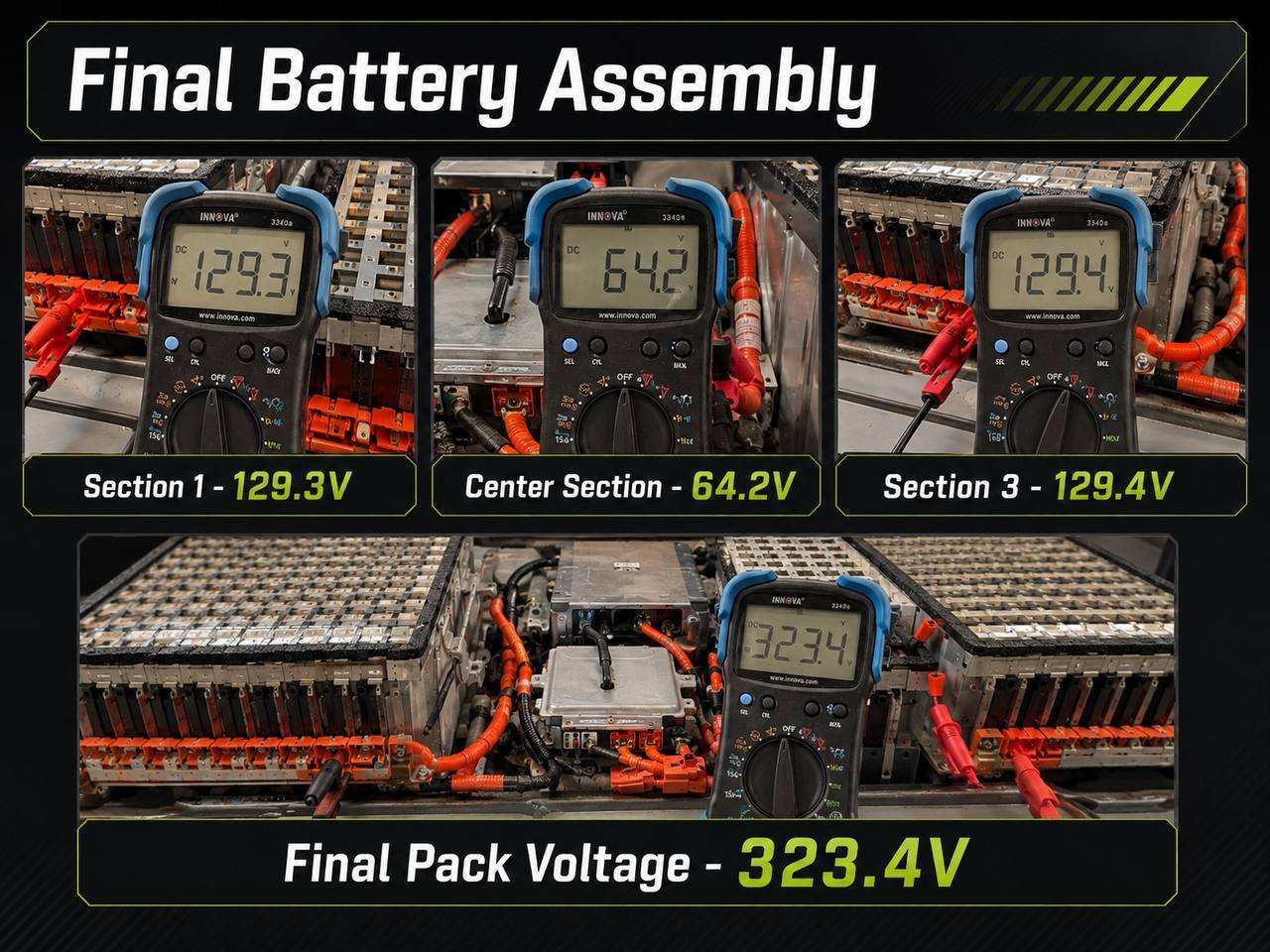
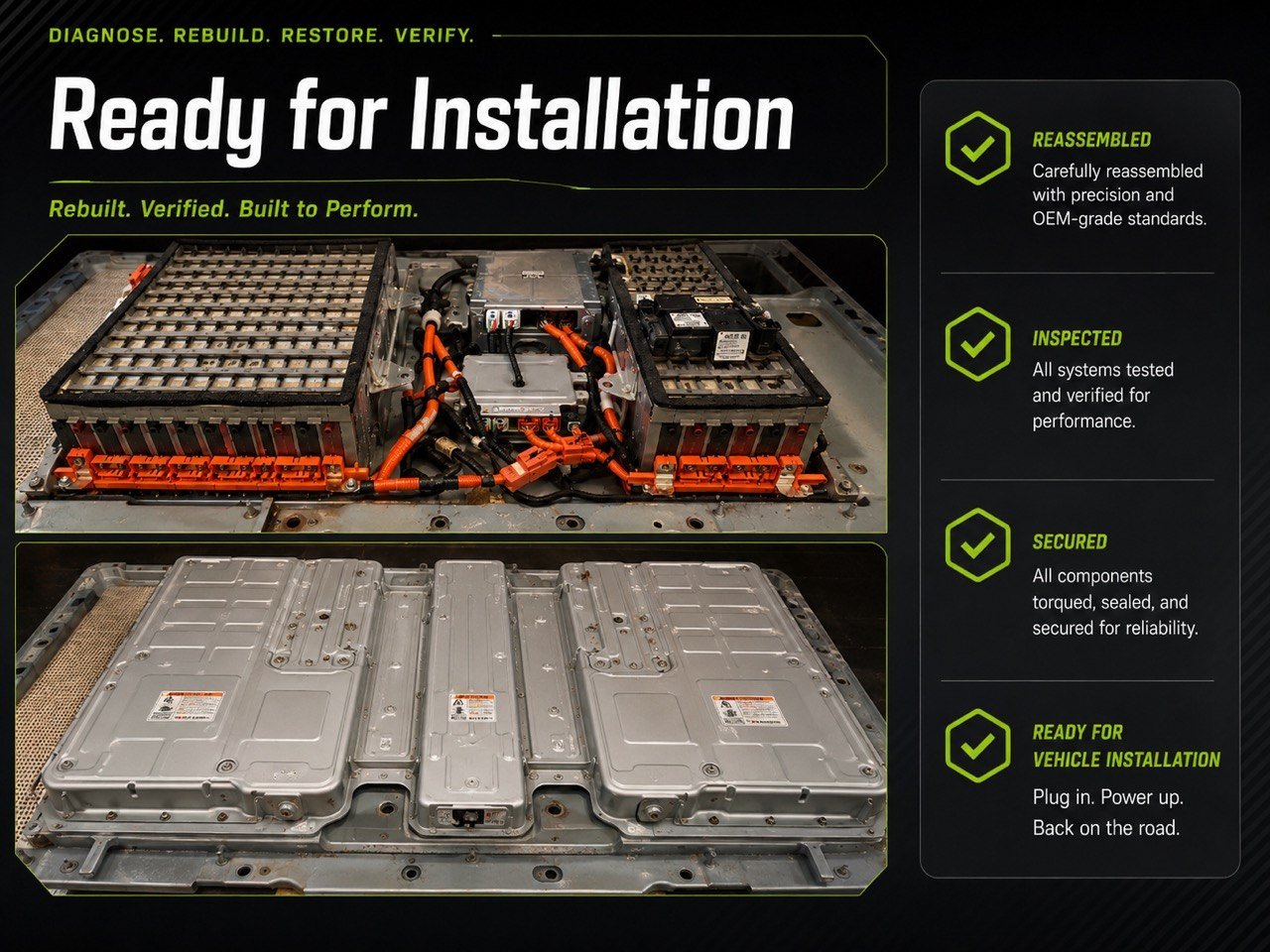
After module selection and balancing, the battery was reassembled and the high-voltage connections were carefully inspected.
Before installation, the rebuilt pack measured approximately:
323V total pack voltage
The three major battery sections measured approximately:
● 129.3V
● 64.9V
● 129.4V
The nearly identical voltage of the two larger sections was a good indication that the battery was well balanced before installation.
High-voltage cables, connections, battery sensing circuits, and related components were also checked before the pack was returned to the vehicle.
Installation and First Start
The rebuilt battery was installed back into the Lexus RX400h.
The vehicle entered READY mode on the very first start attempt.
This was especially important because the original battery had previously shown severe voltage collapse and battery ECU communication/voltage detection problems.
After installation, the vehicle was driven for approximately 30 minutes while the hybrid battery was monitored using professional diagnostic equipment.
No hybrid battery warning returned during the test.
Installation and First Start
The rebuilt battery was installed back into the Lexus RX400h.
The vehicle entered READY mode on the very first start attempt.
This was especially important because the original battery had previously shown severe voltage collapse and battery ECU communication/voltage detection problems.
After installation, the vehicle was driven for approximately 30 minutes while the hybrid battery was monitored using professional diagnostic equipment.
No hybrid battery warning returned during the test.
Final Diagnostic Results
After the road test, all 15 battery blocks were being read correctly by the battery ECU.
Battery block voltages were approximately in the 19.5V–19.9V range during the recorded test conditions.
The battery State of Charge was approximately:
40%
Internal resistance readings across the battery blocks were extremely consistent:
Approximately 0.026–0.029 ohms
No individual block showed a significant internal resistance outlier.
Battery temperatures were also very even across the pack.
Recorded battery temperature sensors were approximately:
32.4°C to 33.8°C
This represented only about a 1.4°C temperature spread across the monitored battery sections.
Consistent voltage, internal resistance, and temperature are all important indicators of a properly matched hybrid battery pack.
Result
The rebuilt Lexus RX400h hybrid battery successfully:
• Entered READY mode immediately after installation
• Restored proper high-voltage battery operation
• Restored normal battery ECU block voltage readings
• Eliminated the original abnormal low-voltage battery condition
• Completed approximately 30 minutes of road testing
• Maintained closely matched battery block voltages
• Maintained highly consistent internal resistance
• Maintained even battery temperatures
• Completed testing without the original hybrid battery fault returning
. Avoided unnecessary OEM battery replacement
Vehicle returned to normal hybrid operation
The vehicle was returned to the customer operating normally.
Why Proper Hybrid Battery Diagnosis Matters
A hybrid battery repair should never be based only on replacing the module with the lowest voltage.
A reliable rebuild requires testing the battery as a complete system.
At DFW Hybrid Battery, our diagnostic and rebuilding process may include:
• Hybrid battery computer diagnostics
• Individual module testing
• Capacity testing
• Internal resistance testing
• Charge and discharge cycling
• Battery balancing
• Voltage matching
• High-voltage connection inspection
• Battery ECU and sensing circuit evaluation
• Post-repair road testing and live-data monitoring
“We do not replace hybrid batteries blindly. We test first and repair only what the data supports”.
The objective is to determine the actual cause of the failure and repair only what is necessary.
Need Hybrid Battery Service in Dallas–Fort Worth?
If your Toyota or Lexus hybrid displays messages such as Check Hybrid System, has hybrid battery trouble codes, poor battery performance, or will no longer enter READY mode, DFW Hybrid Battery can help diagnose the problem before you spend money on unnecessary parts.
DFW Hybrid Battery provides mobile hybrid battery diagnostics, repair, rebuilding, balancing, and replacement services throughout the Dallas–Fort Worth area.
Hybrid Battery Diagnostics • Repair • Rebuilding • Replacement